Pages

Sunday, June 16, 2013

A day in the British countryside

Tarnhows view, Hawkshead, Cumbria.
We're in the midst of the serendipitous section of our travels, with loose plans and usually no overnight reservations.  It's quite different from our planning and booking ahead norm that has us in a place for a few days to a week to get to know an area and to live a normal sort of life.  This serendipitous part isn't that. This was our day three days ago:


Arise to a full-on English breakfast in the B&B (pictured, left, in Hawkshead, Cumbria) with, as desired:  cereal, fruit, yogurt, juice, eggs, bacon (we'd call it ham), sausage (again, different), potatoes, tomatoes, mushrooms, toast (brown or white), coffee, tea.  Followed by "Can I get you anything else, love?"  Only tourists eat like this, we've been assured.

We waddle back to our room, check email, pack our little suitcases (the big ones live in the car boot) and hit the road.  The driving's become pretty easy, even on the tiny, winding roads, which is the norm around here.  But we average only about 25 miles in an hour, and they're a little fraught for the navigator.

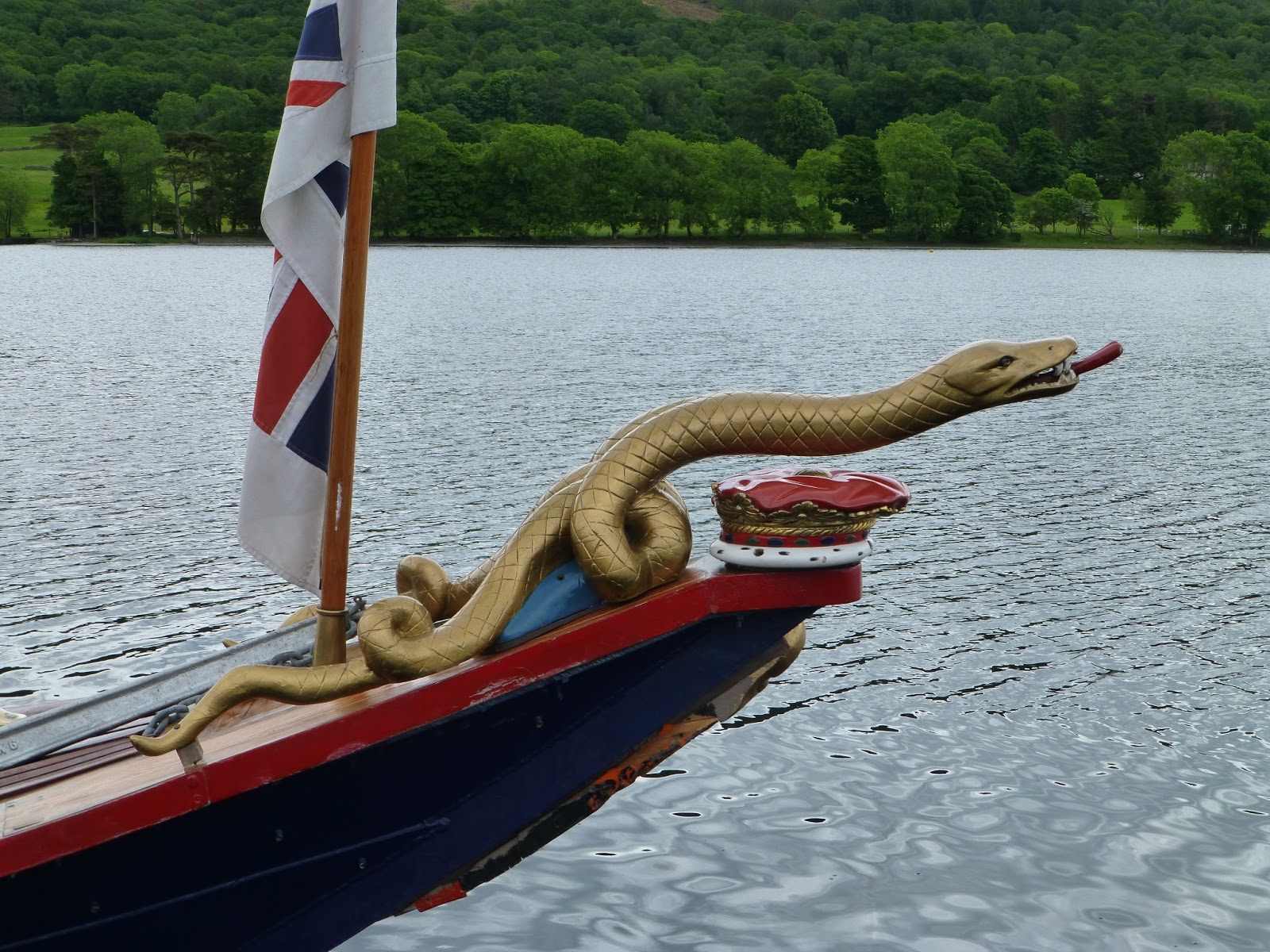
Cumbria is also known as the Lake District, and it's sibling towns (they all have them!) are in the Alps and Italy's lake district -- because that's kind of how it looks here.  It used to be that steam ships operated as pleasure boats in the area in the 1800s, and there's one remaining that's recently been restored.  Modeled after a gondola, it's weird, and steams around the fairly large flat lake.  


Its fancy masthead.
School kids in the lake learning to kayak.  

Inside, pretty fancy.
When we got off the boat, we found mallard ducklings, about a dozen in all,
napping in two little fuzzy piles, with 2 moms nearby.   I'd never seen this before.


We realized that we'd picked up a passenger snail on our car during the night.  We later delivered it to a damp tree trunk.
 We'd had trouble finding local information on Grizedale Forest and its environmental sculpture (a LP recommendation), but we eventually found it.  Once there we decided not to rent bikes for it (great decision) and not to get a map of the sculpture park, not a great decision.   We took off thinking the trails were well-marked.  Our first sculpture was one of my favorites -- a monkey puzzle tree, with faces on its trunk (okay, not actually a sculpture, but a gorgeous work of nature).


Environmental sculptures are often tricky to spot, because the artists enjoy the hide and the surrounds so much.  But it's especially tricky in a real forest.  I have no idea how many we missed, but we found this one on the left -- a big piece of a tree with coin like objects nailed into it in lines.  Unsettling, odd.  And we couldn't help but notice the wind up possibilities with the trees below.  They wound, but nothing else.

A concrete sculpture, playing on the idea of the many stiles that allow folks
to cross fences along the public footpaths (more later). 

This giant fern was hiding behind a copse of trees.

We ended up hiking for several hours and getting pretty lost.  We finally found our way back, pretty tired.  We didn't find the Andy Goldsworthy that was supposed to be there, although we found another in a different sculpture park the next day.  

On the way out of the forest, we saw this field of sheep and odd little brush plants.
We still had time before sunset (the sky lightens here at about 3:30A, darkens at about 10:15P), and drove to within about a mile of a lake view we'd heard about and followed a public footpath to it. Public footpaths crisscross/net the country.  They've been around for centuries, and rights of way for the public remain through people's lands, often with grazing sheep, cows, often through backyards, farms, active fields.  Just an accepted way of life, and they're well used by locals, tourists, long-distance hikers.  They are great fun, and it's pretty awesome to be allowed to walk almost anywhere, with permission.  A very civilized, friendly system.

A public footpath "finger post" pointing the way to different public paths.  
The views from Tarnhows were spectacular.  
Steve's the speck on the fell (hill), viewing the lake below and all around.


View down into a section of the lake.  
One of many sheep in the field of the tarnhows.  This one was losing its winter coat naturally.   We hear from farmers that the wool is not of value these days; it costs more to shear them than the wool is worth.  Still, it has to come off, and some do it on their own, as they would in the wild. 
We found a B&B for the night, went to a pub, literally across the street from the B&B, and had supper, then "home" for the night.
Steve's tired.  
These are the standard sauces at a table in a pub.  Lots of lamb here, hence the mint sauce.
Malt vinegar (for fish and chips)  is in its own little bottle.

Saturday, June 8, 2013

Piety, chimney pots and a boot sale

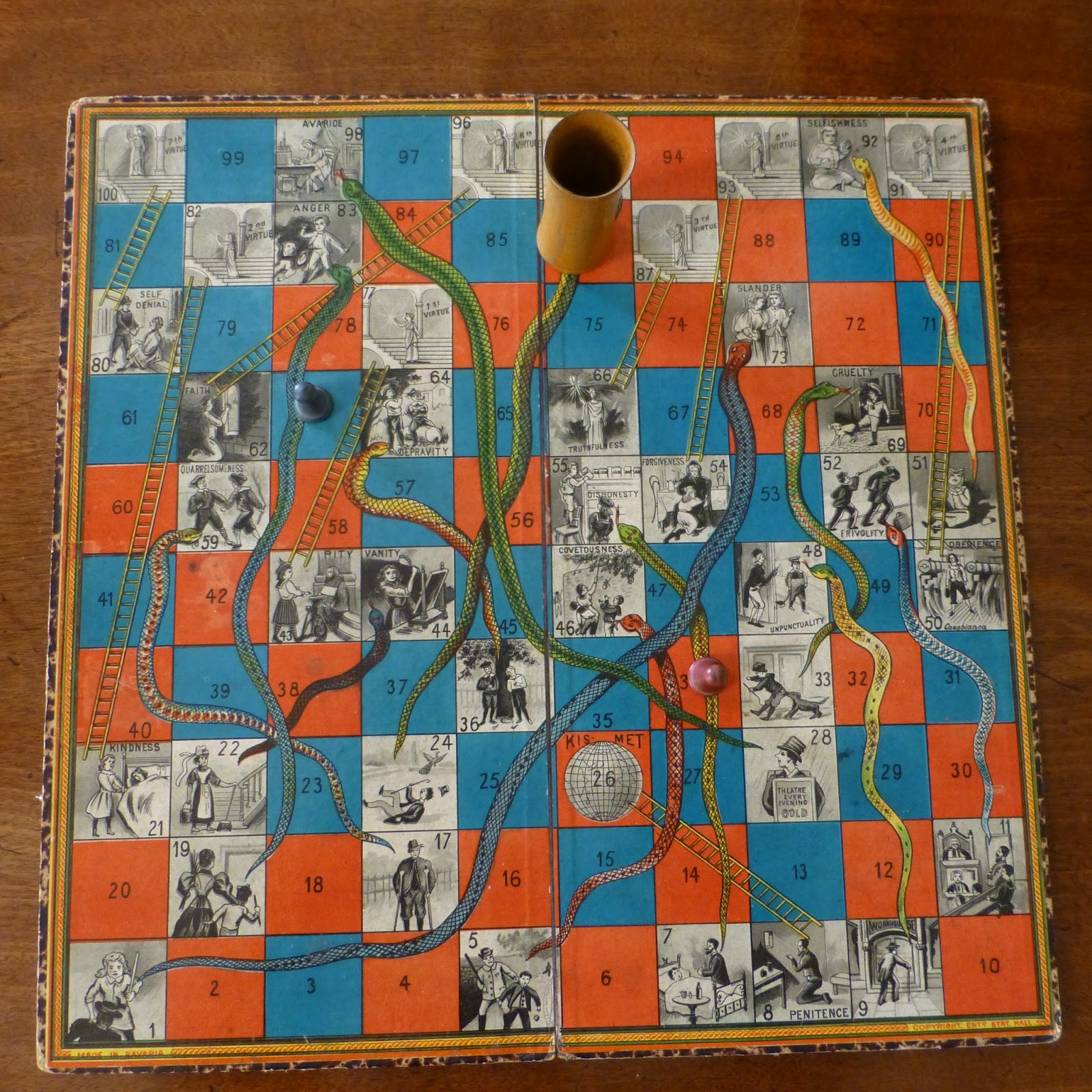
An historic home in Worcestershire displayed the children's game Snakes and Ladders.  At first glance  it seemed a reptilian precursor to the fun/frustrating game of chutes and ladders.  But this Victorian board was much more -- a morality game, with clear directives as to the sort of behavior that leads to Heaven or Hell.  Among the Hell routes:  depravity, avarice, covetousness, unpunctuality, quarrelsomeness, vanity, "going to the theatre every evening" (what?), and many more.  Routes to heaven:  forgiveness, pity, faith, virtuousness, kindness, piety, self-denial.  It's a game of roll-the-dice chance, with waay more ways to go to Hell than Heaven.  Hmm.  


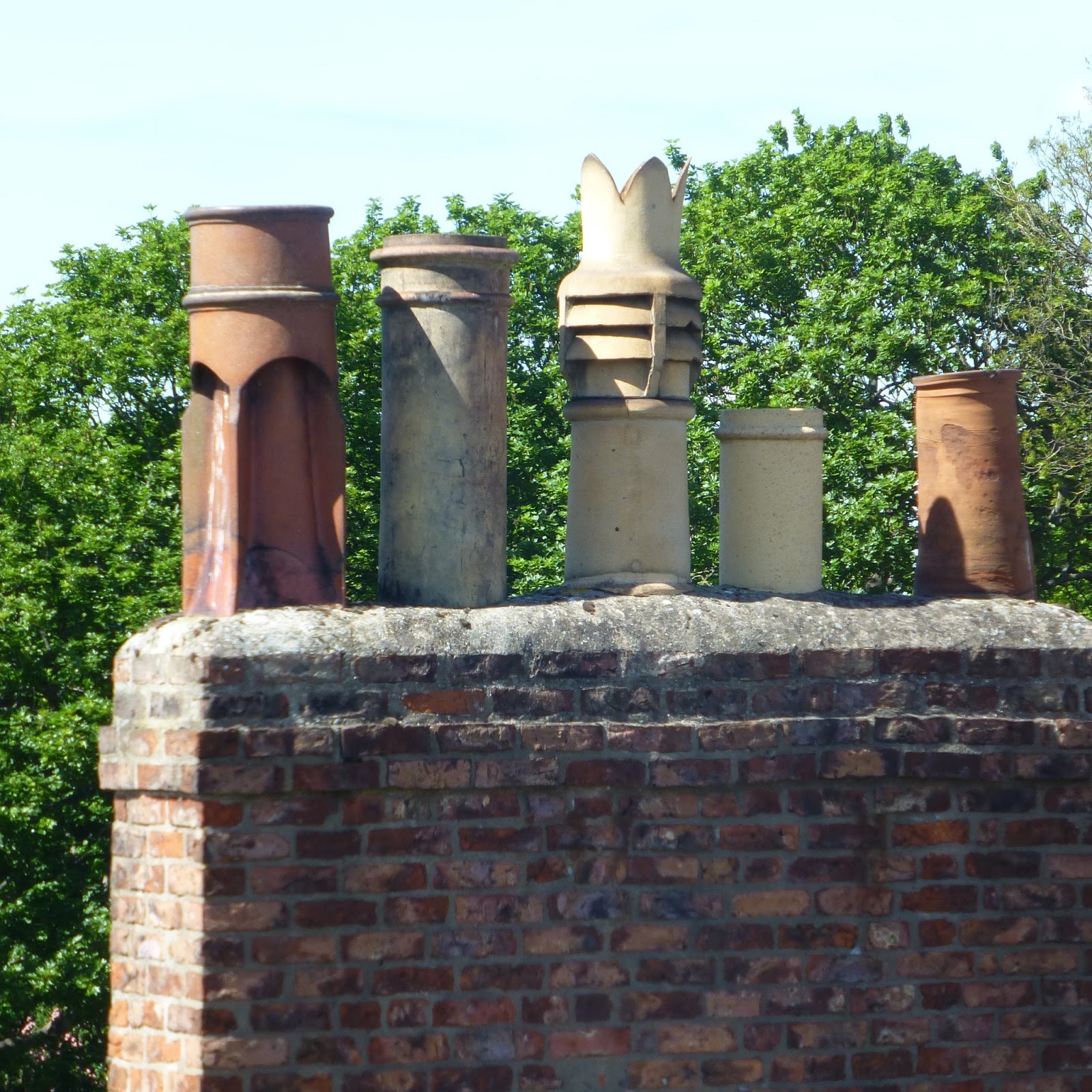
There've been great chimney pots all over the UK.  

There's apparently not much rhyme or reason, no structure to their variation.  Most of the homes -- semi-attached and attached -- are individually owned, and when a new chimney pot is needed the chimney owner or workman makes the decision.  And the pots can last for decades, centuries.


We went to an outdoor antique/flea market/boot sale while in the shire of Worcester, with thousands of others.  Biggest flea market I've ever seen.  And this one had lots of stuffed and mounted animals.  There were lots of deer heads, badgers, foxes, squirrels, pheasants -- mostly gentle creatures from the Redwall books.  And the military offerings (WWI and II) was plentiful, too.  The stuff in Britain's attics seems quite exotic to a midwesterner.


Stuffed caimans in a retrofitted caiman holder. 

Sunday, June 2, 2013

Wales = Cymru . . . ?

Welsh town sign-- a standard example of the language's -- um --  excesses. 
We were in Wales for only 10 days, and stayed decidedly small.  We never set foot in its vibrant big cities --our largest town was 8000--  but pursued its national parks, and were successful in finding them given they are huge, stationary targets.  Driving in Wales was a special challenge, with even twistier and narrower roads than England, and additional befuddling signage.  Not easy, nor fun, and scary.  The directions to our cottage in NW Wales in Snowdonia NP included "you will need to reverse up the road if you meet another car, as the lane is very narrow".  Our 130 mile drive from NW Wales to the shire of Worcester (Worcestershire!) took over 4 hours.

View at sunset from our cottage looking to Llanberis, about a 45 minute walk away.  Lambs not in the photo.

Wales is beautiful, windswept, rocky, sparsely populated, all the things you'd expect, and has a standard sheep/people ratio of 3/1, which during spring/lambing season is way higher, and adorable.  

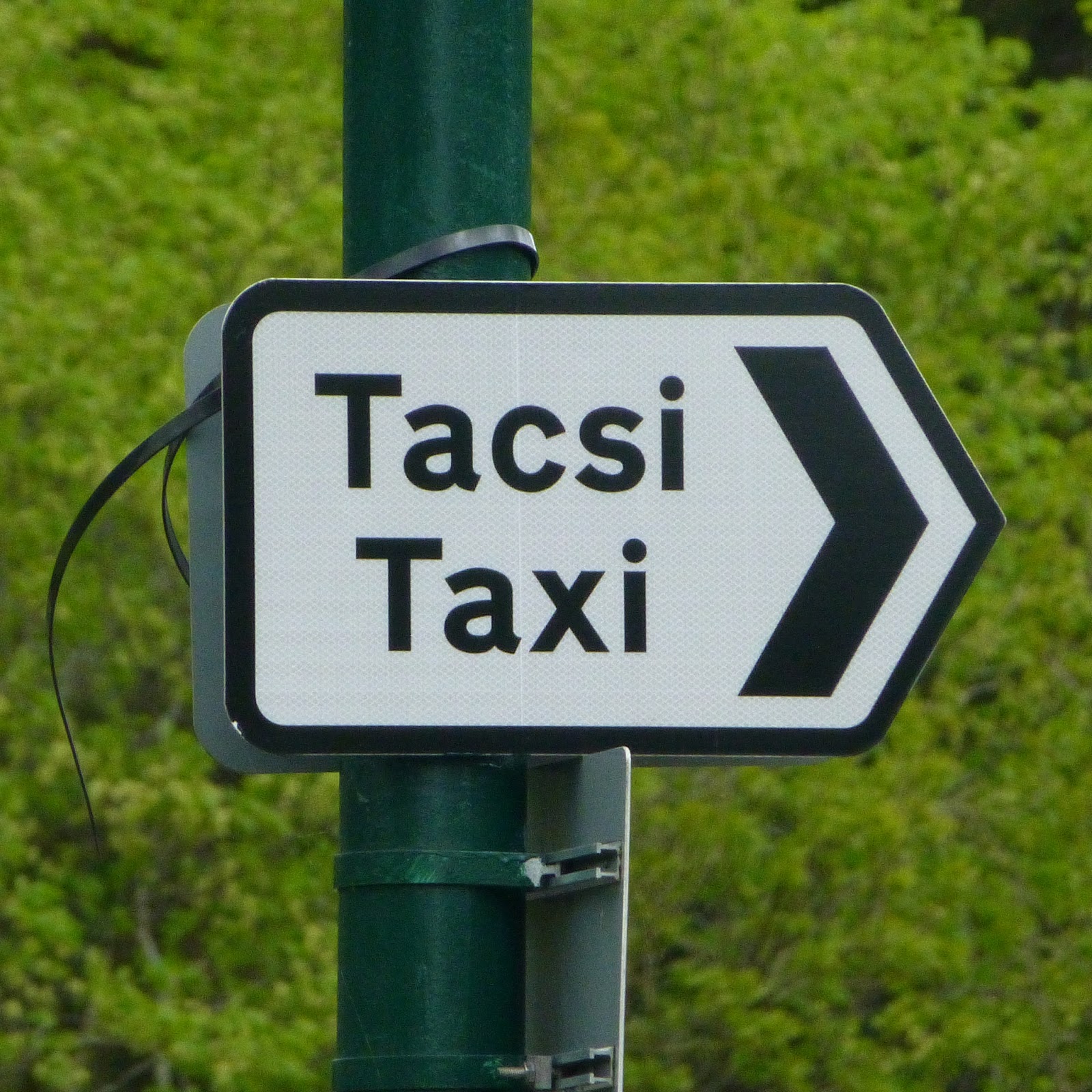
Its language exhibits a shortage of normal vowels and a seeming directive that longer is better in words, and random letter combinations provide additional interest.  There is serious effort and recent legislation to keep the Welsh language alive, with measures passed in 2011 to give it equal status with English in the country.  Even in these economic times of woe (and cuts are deep in all areas, we heard), the teaching of Welsh is mandatory in elementary education, and all signage, instructions and information must be in Welsh and English.  We met several adult Welsh who are learning the language for the first time, and several who are unhappy about the diversion of funds to this initiative, given the economic difficulties.

Spoken (and sung) Welsh is lyrical, lovely and impossible.  And written was worse because we didn't have the luxury of ignoring it (signage!).  The alphabet is "different" with 8 double/mixed consonants (ll, dd, ff, etc), lots of letters just don't exist (j,k,z, etc.), and Ws and Ys always act as vowels.  Sometimes the spelling, pronunciation and translations make easy sense, but more often it was pointless to search for consistency.  Signage was confusing.


The library signage below may have been my favorite because it made such good sense -- the library labeled its adult sections Fiction and Factual.  Surprisingly, many people all over can't keep straight the difference in fiction and nonfiction - the terms just confuse them -- and these are really clear.
 Yes, I'd like some old potatoes, please.
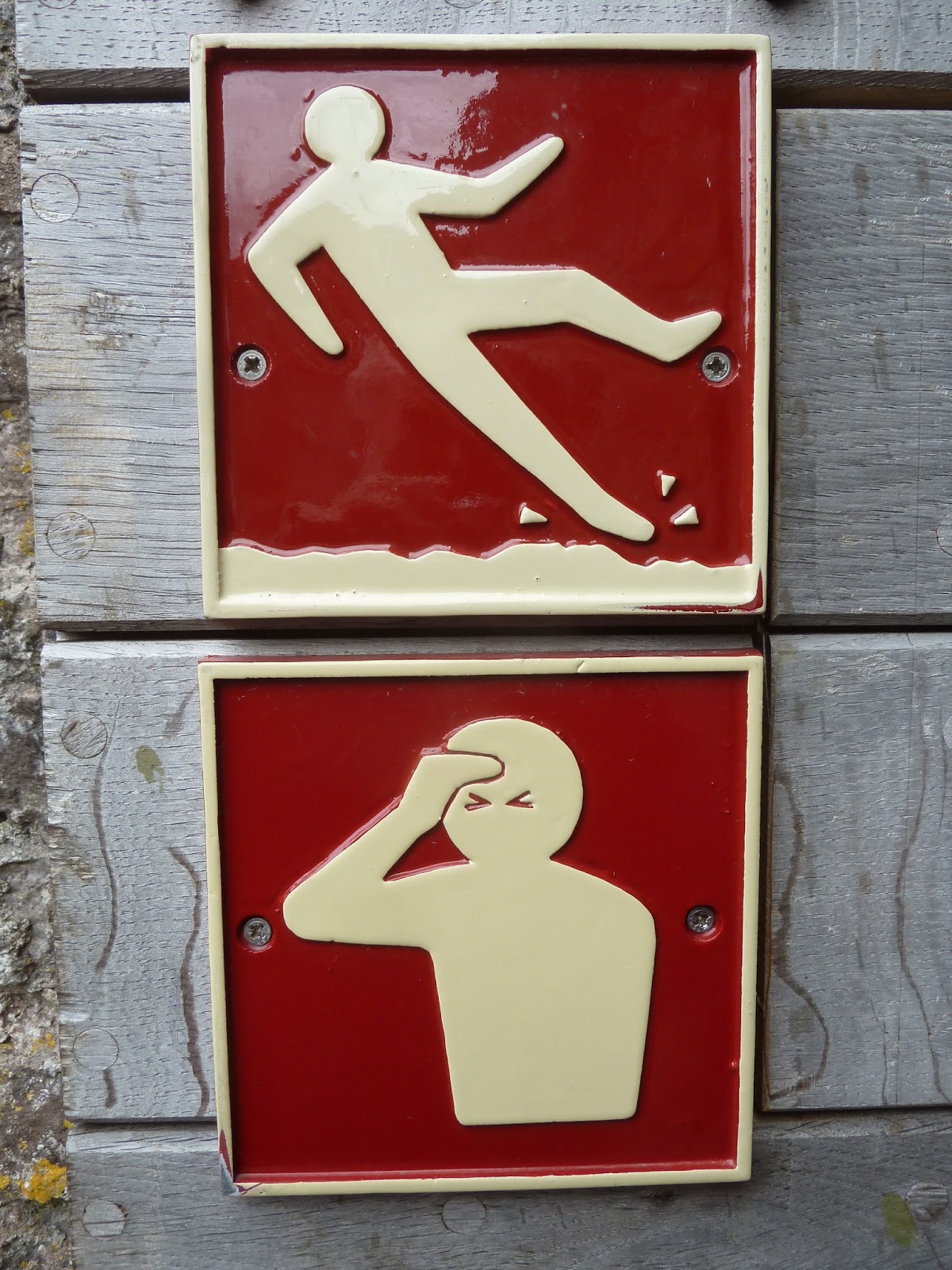
 The heritage sites provided lots of ways to hurt oneself; they stayed away from language warnings. 


Steve and I went separate ways hiking to town one day.  I came across a small section out in the woods that was clearly different, including this gateway, and statuary.  I was hoping to meet some nice wiccans, witches or druids.  No luck.


Much of Wales is slate under the surface, and it was a huge part of the economy 1600-1960s.  We visited the nearby National Slate Museum and its quarries.  There was even a small quarry right behind our little rented cottage, which looked to me like a deep sinkhole, but had been the personal quarry of the builder of our hosts family's home in 1640.  Slate still has lots of uses in the area.
A slate fence.
The church was built of , roofed with, surrounded by slate.
Slate gravestones from the back -- looked like cookies.
While in Brecon, Wales (inside another national park), we sat in on a rehearsal of one of the local men's choirs.  They were really, really good.   Apparently singing is a big thing for men in Wales -- lots and lots of local men's choirs.  Not so much women's, although it gets started early, with school kids typically start their days with song.

A Welsh double mousetrap from the 1880s.
The best broom I've seen so far, and it was new for about $10.