Pages

Wednesday, September 5, 2012

Hummingbird cows

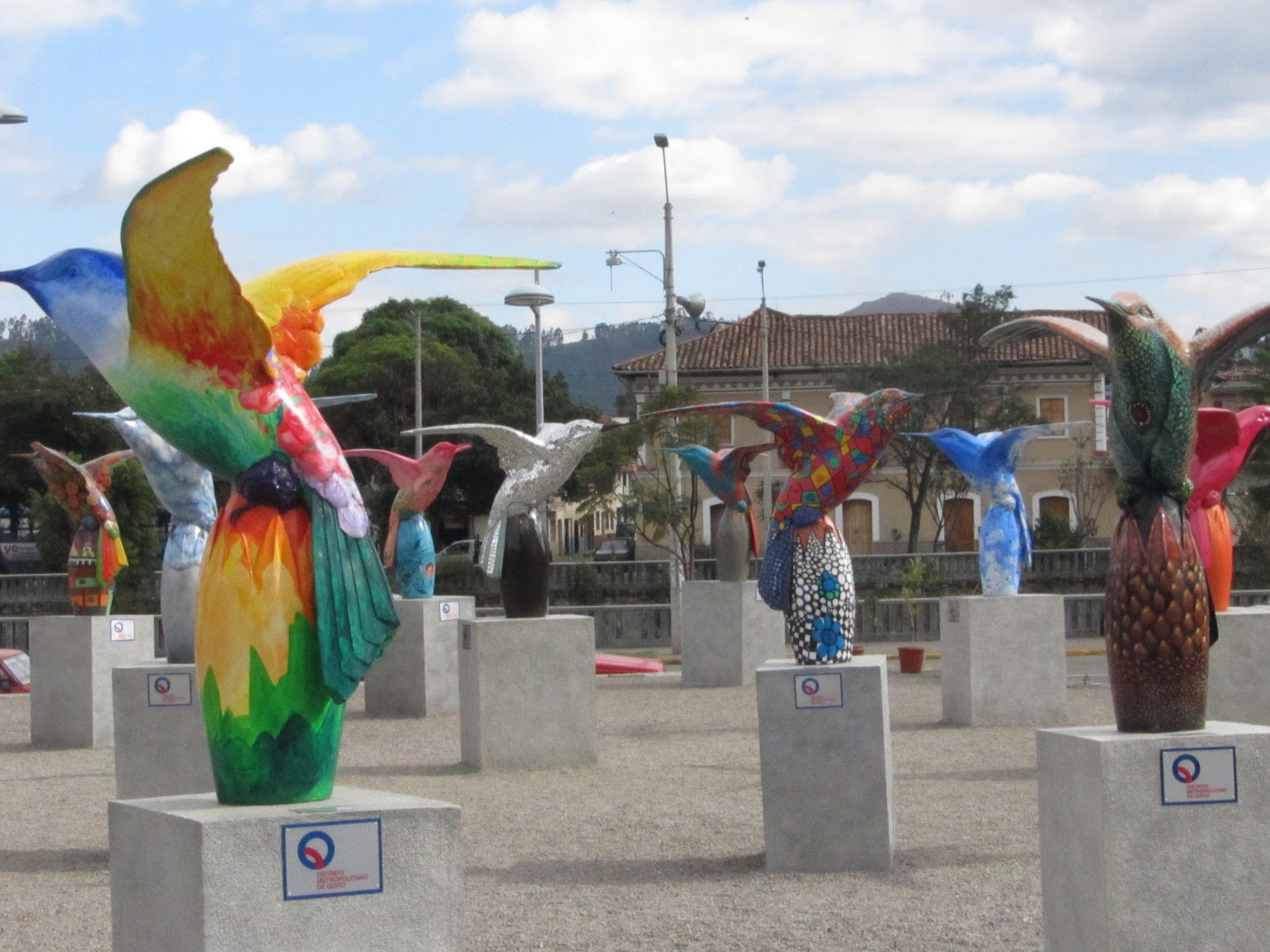
While the Andean Condor is officially the national bird of Ecuador, the hummingbird is waay more plentiful, visible, heralded and celebrated, and apparent in Ecuador's statuary.  The Ecuadorean city of Quito recently sponsored a hummingbird event along the lines of Chicago's 1999 Cows on Parade. The results travel the country, and we stumbled across the exhibit on a walk in Cuenca.

Big plaza, full of hummingbird statues.

Don't understand, but the pregnant lady's lovely. 
Sparkly one. 
Much easier to photograph these than the real ones.

This one had eyelashes.


Bored hummingbird guards.

Response to suggestion maybe we're not really here.
Ecuador has a wealth of hummingbirds, over 130 species -- Steve caught this one at ease here in Cuenca, perhaps picking up on the bigger, above ladies' relaxed behavior.

Tuesday, September 4, 2012

Retail in Cuenca

While on a walk in Cuenca a few days ago, we ran across these very modern-looking signs, advertising catering and laundry for "mujeres con exito" -- successful women.

Haven't seen much of that target market of mujeres/ladies.  We're much more familiar with the retailers below -- the lovely vendors who sell their wares in the open markets.

Vendors one of the many marketplaces in Cuenca.
Street vendors typically have their littler kids along. 
The flower market ladies mostly wore blue aprons with white lace.  Containers of rose petals, and lots of already-made arrangements to place on the altar of a favorite saint in one of the many nearby churches. 

Motorbikes and cycles are sold in appliance stores in Cuenca.


We ran across this closed store front - would have loved to see their merchandise.  Clearly no "o" in the sign or logo.
On Sunday we were at Mall del Rio, the local big mall, with many shoppers on the day before school started.  Great place to observe local life.  There was a delightful bungee ride for little kids which sent kids flying and squealing in pleasure. As always, I can't mount videos here, so a couple of tiny videos are on my Facebook page. 

There were also three hopscotch courts laid out as well, all in use.


This store, sweet & sexy, was a toy and jewelry store for little girls - one exiting.

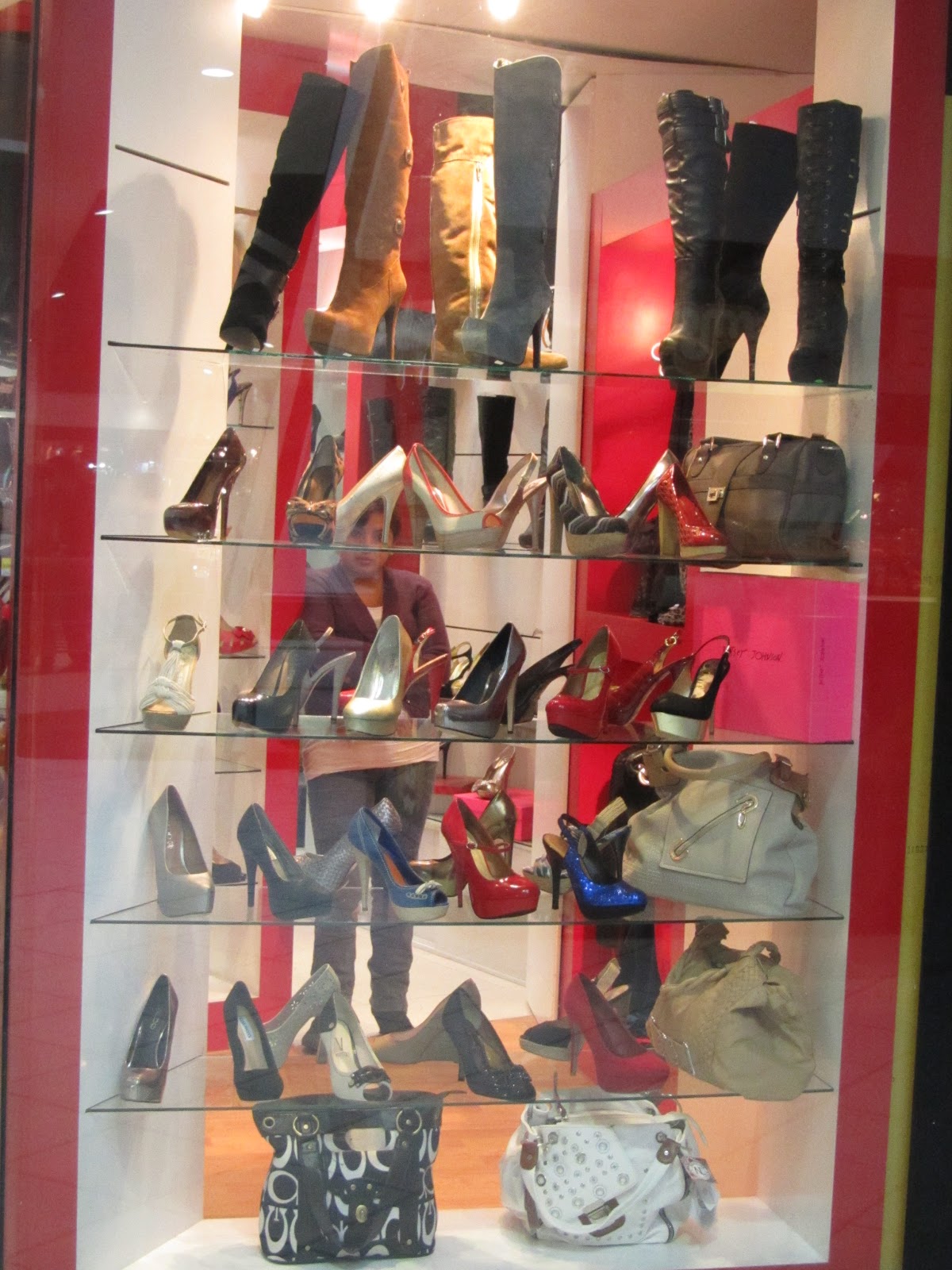
Stilettos are very, very popular here -- on the cobblestone streets, in the parks, walking along the river, wherever.  Perhaps it's the desire to appear/be taller, clearly stylish, perhaps their feet have no nerve endings?

This sign for the Mayflower fast food emporium.  
We couldn't figure out the logo for the Mayflower, above.  My best: it's a dragon with deer's head with whiskers, wearing a cross necklace (hard to see), handing out string.  Couldn't figure it out, nor a Mayflower connection.  Do you see it??  


Sunday, September 2, 2012

Marine iguanas

The Galapagos are baby islands, fresh from underwater volcanic action, some less than 500,000 years old.  So, while they're working at it, they aren't terribly fertile, and many look like hardened volcanic ash, which they are.  Marine iguanas have adapted.

The only marine lizard, these evolved from land iguanas to feed on what was available and plentiful -- coastal seaweed. Their noses flattened, their tails became vertical for swimming (like a gator), and they developed salt-eliminating glands.  They can stay underwater for over an hour, grazing. The water's cold and when they come out they need to quickly warm their bodies for digestion, and to get ready to do it again.  And while the volcanic rocks are warm, they pile onto each other for added warmth in the cooler months.  

Marine iguana, feeding underwater. 
Looking out to sea.
Hanging out - they're sociable creatures.
A warming pile of friends. 
They expel excess seasalt through special nasal glands.  It's explosive and surprising, and they always look a little drippy, like they need a tissue afterwards.  I've seen only a few people who have mastered this nasal snort.
In a warm spot of sand - no need to move out of the path just for us.
They're harmless, have few natural predators as adults, and, being Galapagos inhabitants, are unconcerned about humans.
The multitudes.  The roughness apparent on the rocks is hundreds of iguanas, warming in the sun.
They grow to about a meter in length.

Another great place to hangout with friends.  Notice the tail tracks.


Tail up - means it's pooping, otherwise it's tail down, hence the tracks as above.


And a land iguana, the marine's ancestor.  Notice its tail, lost in some epic battle for survival. 


Saturday, September 1, 2012

Galapagos underwater

As promised, below are a number of underwater pictures from the Galapagos; most were taken by others on the trip with more experience and better equipment.

a white tipped shark

 Sea stars - there were many different colors and shapes.

 spotted eagle rays

lots of colorful fish
and some huge schools of fish.
Sea lions cavorting - they, especially the younger ones, seemed to like to swim with us.

marine iquana looking for algae to eat
and, of course, sea turtles
 At this spot there were so many sea turtles that it was almost impossible to avoid bumping into them (mustn't touch!).
Sea lion and turtles at play
and a penguin feeding. 
We also saw flightless cormorants feeding in the water, but don't have pictures.