On Thursday we came to Banos, a little town about 170k SSE of Quito, known for its thermal waters and relaxed atmosphere. Banos is at the foot of Vulcan(o) Tungurahua, the source of its healing thermal waters and some excitement when in 1999 it came to life (after 80 years) and acted like it was ready to blow. It
didn’t, but caused the town to be evacuated for months, and set back the town’s
economy greatly. Anyway, the volcano's still considered active, although quiet, the town has recovered and is a delightful place drawing international and Ecuadorian tourists.
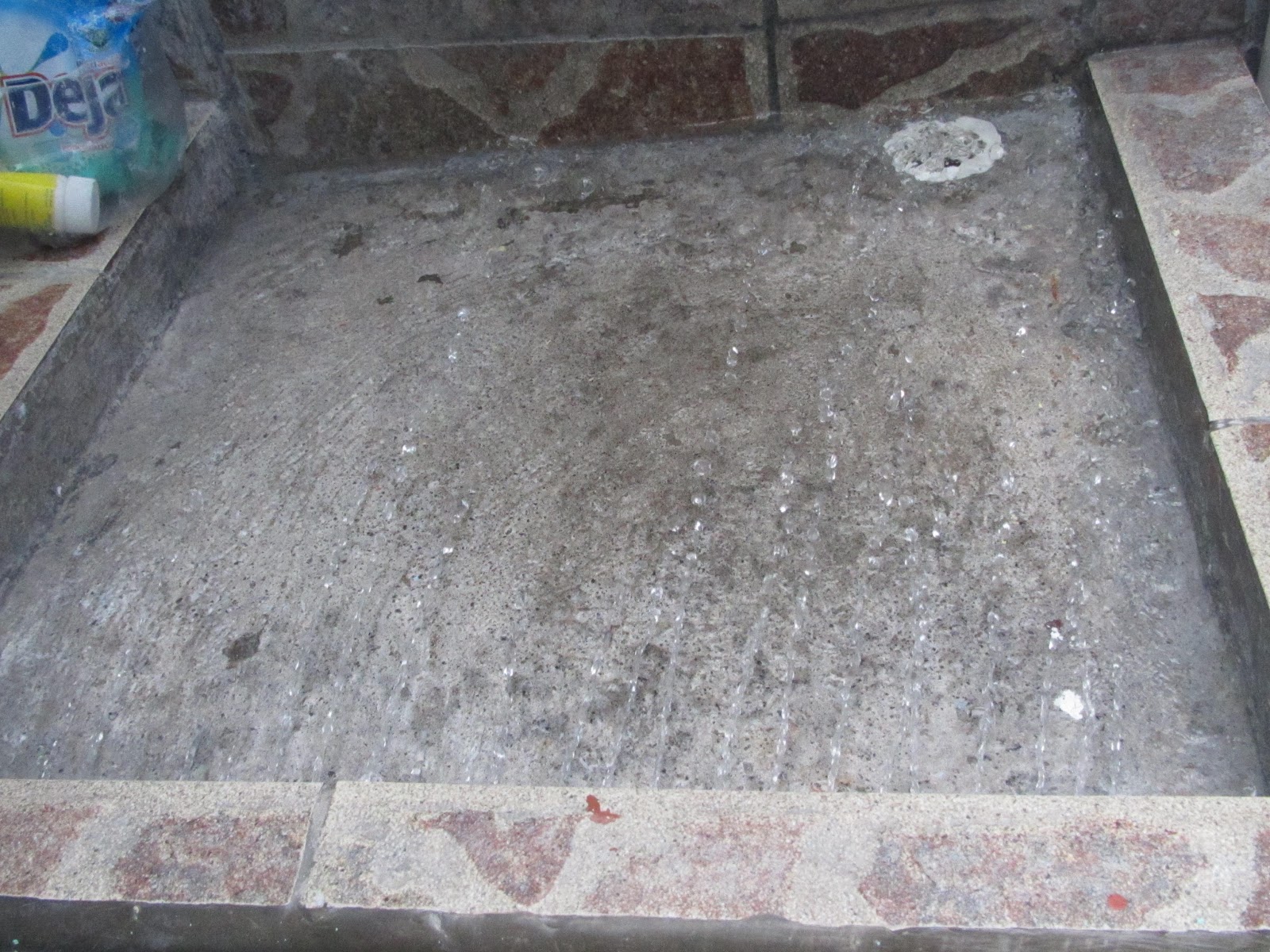
We were at a little hostel in the city our first two nights, the only Americans there. We enjoyed the city's thermal and cold baths with lots of Ecuadorians, rented a dune buggy to very noisily zip around the city's outskirts, had a massage, ate well, saw a beautiful cementario, watched a local soccer game, hung out, and became very frustrated with the hostel's terrible internet. That hostel's "laundromat" had an amazing feature I'd never seen, though -- an automatic rinse cycle -- see below -- a little lever that forced water to sprinkle out of a grid at the upper end of the washing stone. Hard to see, but very cool.

We were at a little hostel in the city our first two nights, the only Americans there. We enjoyed the city's thermal and cold baths with lots of Ecuadorians, rented a dune buggy to very noisily zip around the city's outskirts, had a massage, ate well, saw a beautiful cementario, watched a local soccer game, hung out, and became very frustrated with the hostel's terrible internet. That hostel's "laundromat" had an amazing feature I'd never seen, though -- an automatic rinse cycle -- see below -- a little lever that forced water to sprinkle out of a grid at the upper end of the washing stone. Hard to see, but very cool.

The waterfall that fills the cool thermal baths and showers below.

The thermal baths, filled from underneath.

And the rinsing station for swimsuits just outside the baths.

The dune buggy. We had to wear helmets.
 Yesterday we moved to our current hostel, about 2k out of town. It’s new, built by very aware and committed folks
from NZ and AU, to internal (not governmental) standards about eco-sustainability and responsibility. It's lovely, comfortable, magical.
From our balcony (photo right), I just watched a little blue tanager bathe in a palm leaf, full of water from a little
rainstorm this morning. The birds are
fantastic, as always, and the river's constant burbling is delightful. It’s a little hostel, not so many
guests. Breakfast of homemade bread,
their organic farm-grown tomatoes and avocados, fresh orange and pineapple juice,
coffee, tea. Soon we’ll go over to the
nearby thermal banos (baths), return to an in house massage, read for a bit
then walk into town for dinner and some local music. Sweet, sweet life.
This is only our 5th hostel on this trip (we keep returning, to the same one in Quito, so can only count it once). I check them out prior, and decide based on the usual standards --mine being, in order of importance,
safety, cleanliness, character, ratings, etc., and ensuite, a luxury – and we’ve done well although at
times the plumbing’s been an issue, or cleanliness – luck of the draw by
room. But all have offered the same
delights in the other guests: friendly,
open, adventurous folks, happy to be sharing an interesting experience, not so many from USA, and few our age. First night in Banos we met a writer for the Rough Guides. Last night we ate here, and shared dinner with a Belgian woman whose son and husband are in the Galapagos. She doesn’t like boats, so came to
Banos. Discussion of
religion, governments, education, occupations, philosophy. Happily her English was good enough to
discuss conceptual stuff. Steve's Spanish is improving, mine seems to advance in small fits and spurts.
I've rambled. If you have thoughts as to what might be
interesting, please say so. More on birds? Foods? Oddities? Ceme(n)teries? More/fewer words? More/fewer photos? The comments are unmoderated, btw.
NEW: Accounting section: 4 hour bus trip Quito to Banos, $4.10pp; first hostel, $7pp, no breakfast; this hostel $20pp with breakfast; dunebuggy $10/hour; 60 min massage $25/pp; baths $2pp; dinner at hostel $6.50pp; big beers $1.25; full lunch (chicken, rice, soup, juice, vege, dessert) $2.50pp.
NEW: Accounting section: 4 hour bus trip Quito to Banos, $4.10pp; first hostel, $7pp, no breakfast; this hostel $20pp with breakfast; dunebuggy $10/hour; 60 min massage $25/pp; baths $2pp; dinner at hostel $6.50pp; big beers $1.25; full lunch (chicken, rice, soup, juice, vege, dessert) $2.50pp.